
Auto Explained
Minimum Credit Score Needed for an Auto Loan
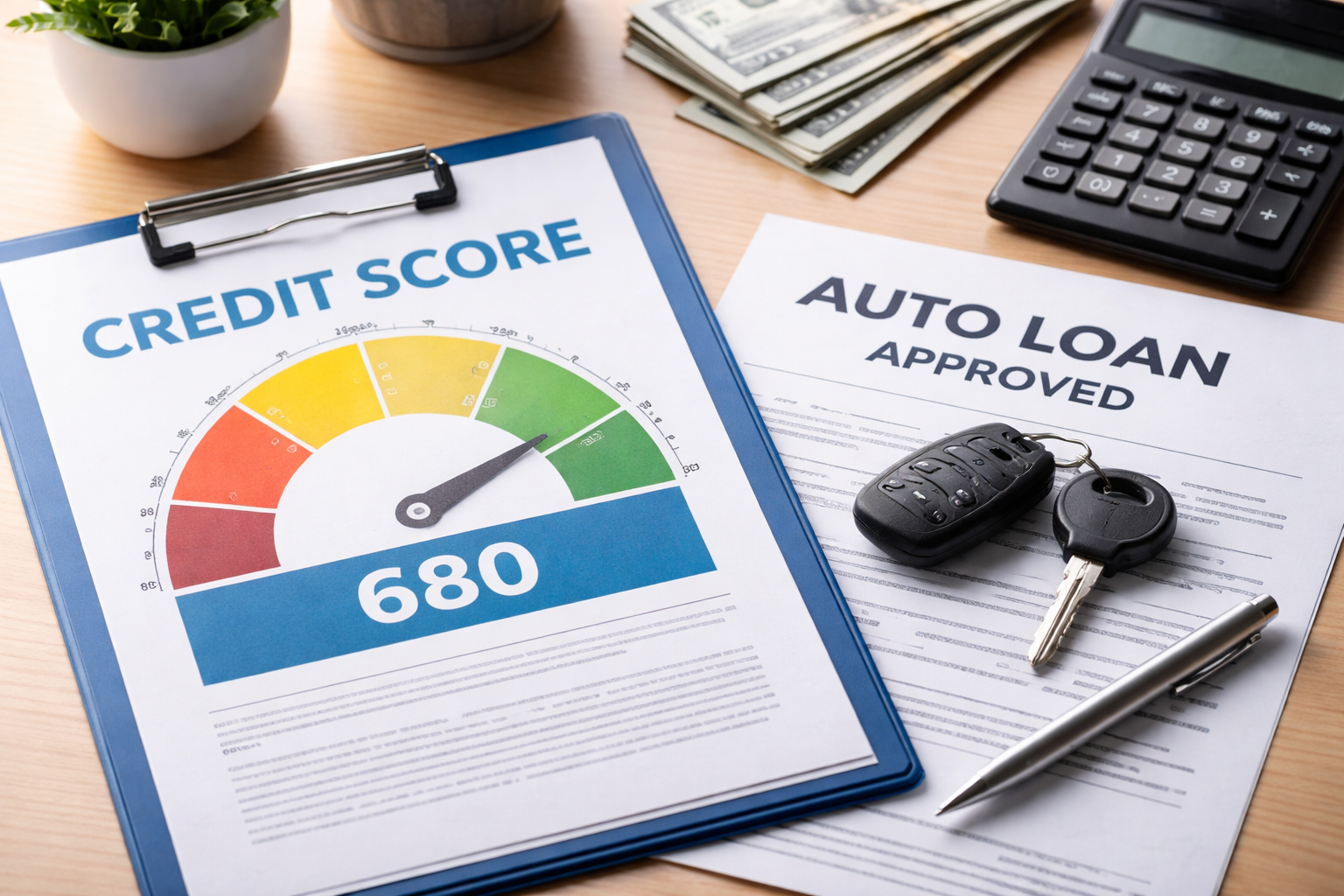
There isn’t one universal minimum score. Some lenders approve lower scores, but the trade-off is usually a higher APR and stricter terms. Here’s what “minimum” really means — and what matters just as much as the score.
Quick answer
- Some lenders can approve borrowers in the 500s, but rates are typically high.
- Many “standard” approvals start around the mid-600s+ (with better APR options).
- Income, down payment, and the car itself can matter as much as your score.
“Minimum credit score” is not one number
When people ask for the minimum score, they usually mean: “What score do I need to get approved?” But lenders don’t all use the same cutoff. Some are flexible, and some are strict.
If you want the basics first, start with what a credit score is →
What lenders look at for an auto loan
Your credit score is important, but it’s only one piece. Auto lenders typically consider:
- Income stability: can you reliably make the payment?
- Debt load: how much you already owe compared to income
- Down payment: reduces the lender’s risk
- The car: age, mileage, price, and how “financeable” it is
- Loan amount: smaller loans are often easier to approve
A practical “range” instead of a fake cutoff
These ranges aren’t guarantees — they’re a realistic way to think about approval odds and pricing:
- 500–599: possible approval, but expect high APR and stricter rules
- 600–659: approvals become more common, pricing still not great
- 660–719: generally “good” tier for many lenders
- 720+: best odds for top APR offers and flexible terms
Why a down payment can “replace” points
If your score is borderline, a larger down payment can help because it lowers the amount financed and reduces risk. It can also help you avoid being upside-down on the loan.
The “real” minimum: payment affordability
Even with a decent score, people get denied when the payment doesn’t fit their income and existing bills. If a lender thinks the payment stretches you too thin, the score won’t save the deal.
Key takeaway
There isn’t one minimum credit score for an auto loan — there’s a range. If your score is lower, your best leverage is a realistic car choice, a stronger down payment, and a payment that clearly fits your income.