
Money Explained
How Loan Terms Affect Total Cost
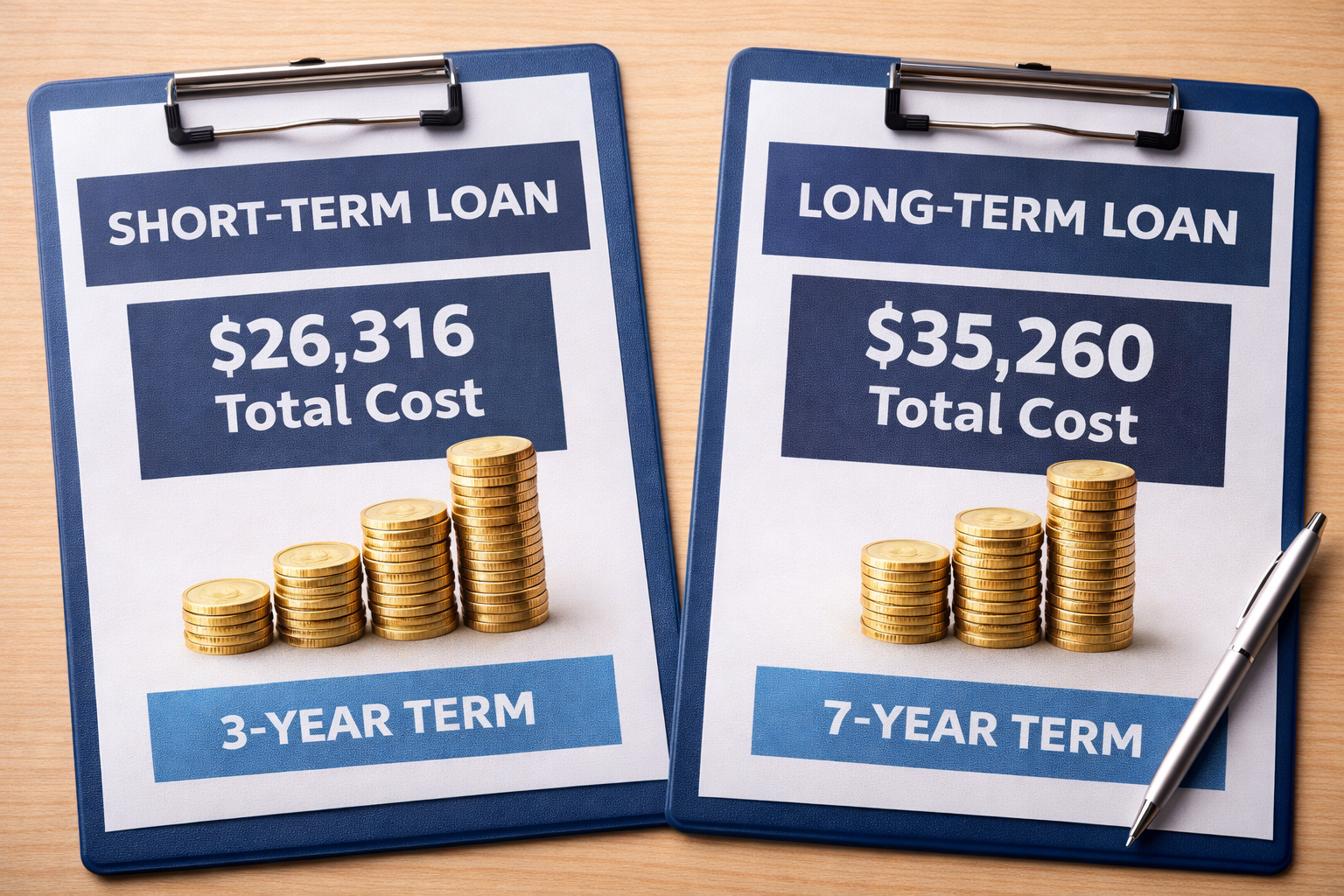
A longer loan term lowers your monthly payment — but usually increases how much you pay overall. Here’s why term length matters more than most people realize.
Quick answer
- Longer terms = lower monthly payments.
- Longer terms = more total interest paid.
- Shorter terms cost more monthly but less overall.
What a loan term actually is
The loan term is the number of months you agree to repay a loan. Common auto loan terms are 36, 48, 60, 72, or even 84 months.
If you need a refresher on how monthly payments are structured, see how car payments are calculated →
Why longer terms cost more
Interest accrues over time. The longer you borrow money, the more time the lender has to charge interest.
Example:
3-year loan → higher payment, less total interest.
7-year loan → lower payment, significantly more interest paid.
The monthly payment trap
Dealers and lenders often focus on “What payment do you want?” because extending the term can make almost any price look affordable.
- Lower payment feels easier.
- Total cost becomes less obvious.
- You may stay in debt longer than the car lasts.
When a longer term makes sense
A longer term can make sense if:
- You need lower payments to stay within budget.
- You plan to pay extra toward principal.
- You have a strong emergency fund. How Much Income Do You Need for a $300k Mortgage?
Key takeaway
Loan term length directly affects how much interest you pay. Lower monthly payments are attractive, but shorter terms usually win on total cost.
Why Dealers Focus on Monthly Payment Instead of Total Cost