
How Interest Is Calculated on Installment Loans
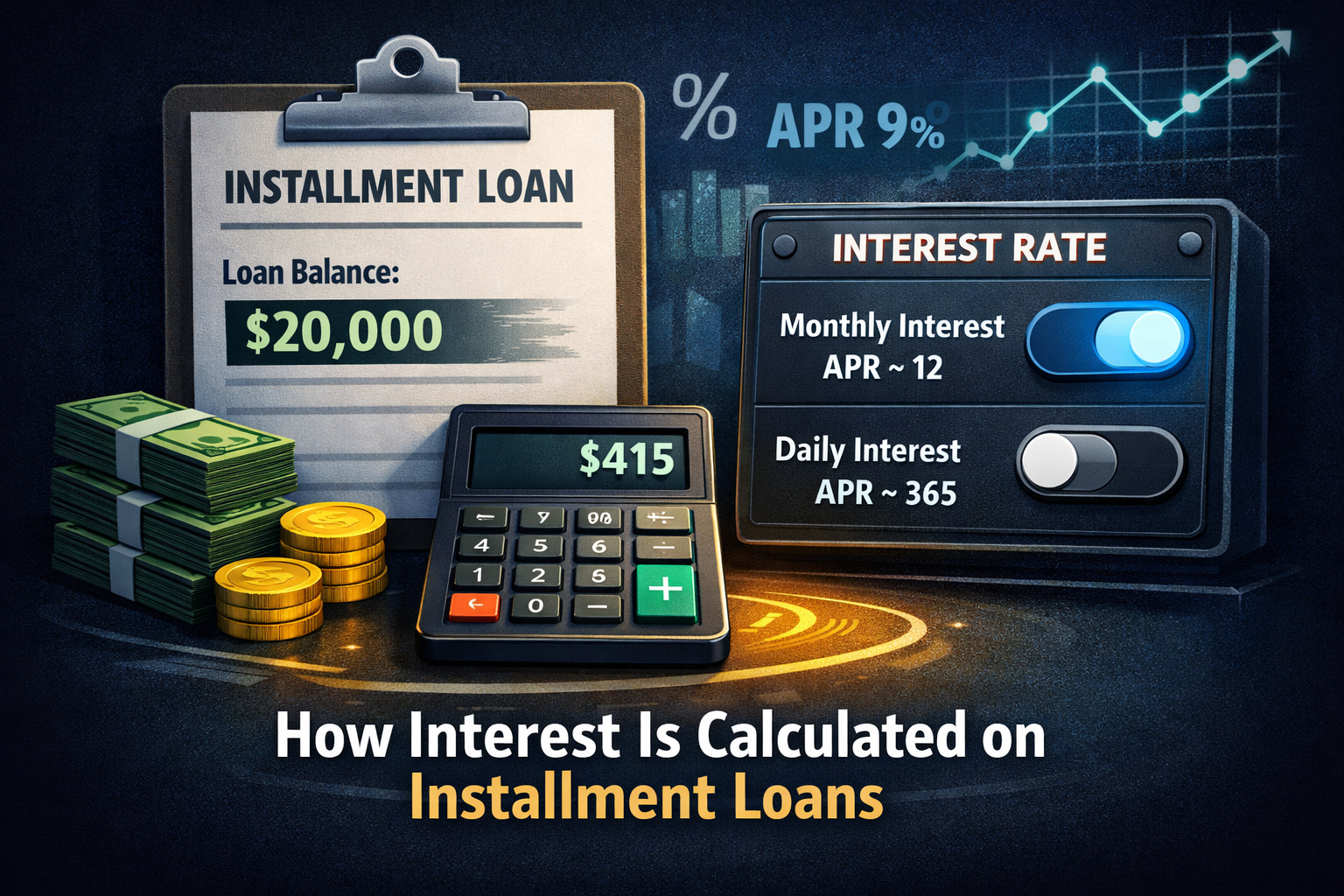
An installment loan is any loan you pay back in fixed payments over time (like auto loans, personal loans, and many mortgages). The part that confuses most people is this: you don’t pay the same amount of interest every month, even if your payment stays the same.
The simple idea
On most installment loans, interest is calculated using your current remaining balance (also called the principal). Early in the loan, your balance is high, so interest is higher. As you pay the balance down, interest shrinks.
The basic interest math (monthly interest)
Most lenders use a monthly rate based on your annual interest rate:
Monthly Interest = Remaining Balance × (APR ÷ 12)
Example: If you owe $20,000 and your APR is 9%, your monthly rate is 0.09 ÷ 12 = 0.0075 (0.75%).
Monthly interest that month ≈ $20,000 × 0.0075 = $150.
Why your payment stays the same but interest changes
Your payment is designed to cover:
- Interest for that period
- Principal (the amount that reduces what you owe)
Early on, more of your payment goes to interest. Later, more goes to principal. This is why the loan feels “slow” at first: you’re mostly paying interest while the balance decreases gradually.
A quick “first month” example
Let’s say:
- Loan balance: $20,000
- APR: 9%
- Monthly payment: $415 (example payment)
Month 1
Interest ≈ $20,000 × 0.0075 = $150
Principal paid = $415 − $150 = $265
New balance ≈ $20,000 − $265 = $19,735
Next month, interest is calculated on $19,735 instead of $20,000, so interest is slightly lower. That means slightly more of your payment goes to principal, and the balance drops faster over time.
Daily interest vs monthly interest (why your due date matters)
Some installment loans (especially some auto and personal loans) use daily simple interest. That means interest accrues each day based on your balance:
Daily Interest = Remaining Balance × (APR ÷ 365)
If you pay a few days late, more interest accrues before your payment hits. If you pay early, less accrues. Either way, the rule stays the same: interest is tied to time + remaining balance.
What happens if you pay extra?
On most installment loans, extra payments can reduce total interest because they reduce your balance faster. But there are two important details:
- Make sure extra money goes to principal (not “next month’s payment”).
- Check for prepayment penalties (less common, but they exist).
APR vs interest rate (why they can be different)
Your interest rate is the rate used to calculate interest. Your APR often includes certain fees spread over the life of the loan. That’s why two loans can show similar rates but different APRs.
One thing people miss: term length changes total interest
Even if the rate is the same, a longer term usually means you pay more total interest because the balance exists for more months. If you want a simple way to think about that tradeoff, read: How Loan Terms Affect Total Cost .
Bottom line
- Interest is usually calculated on your remaining balance.
- Early payments include more interest; later payments include more principal.
- Daily-interest loans can change slightly based on payment timing.
- Extra principal payments can reduce total interest (when applied correctly).