
Auto Explained
Why Dealers Focus on Monthly Payment Instead of Total Cost
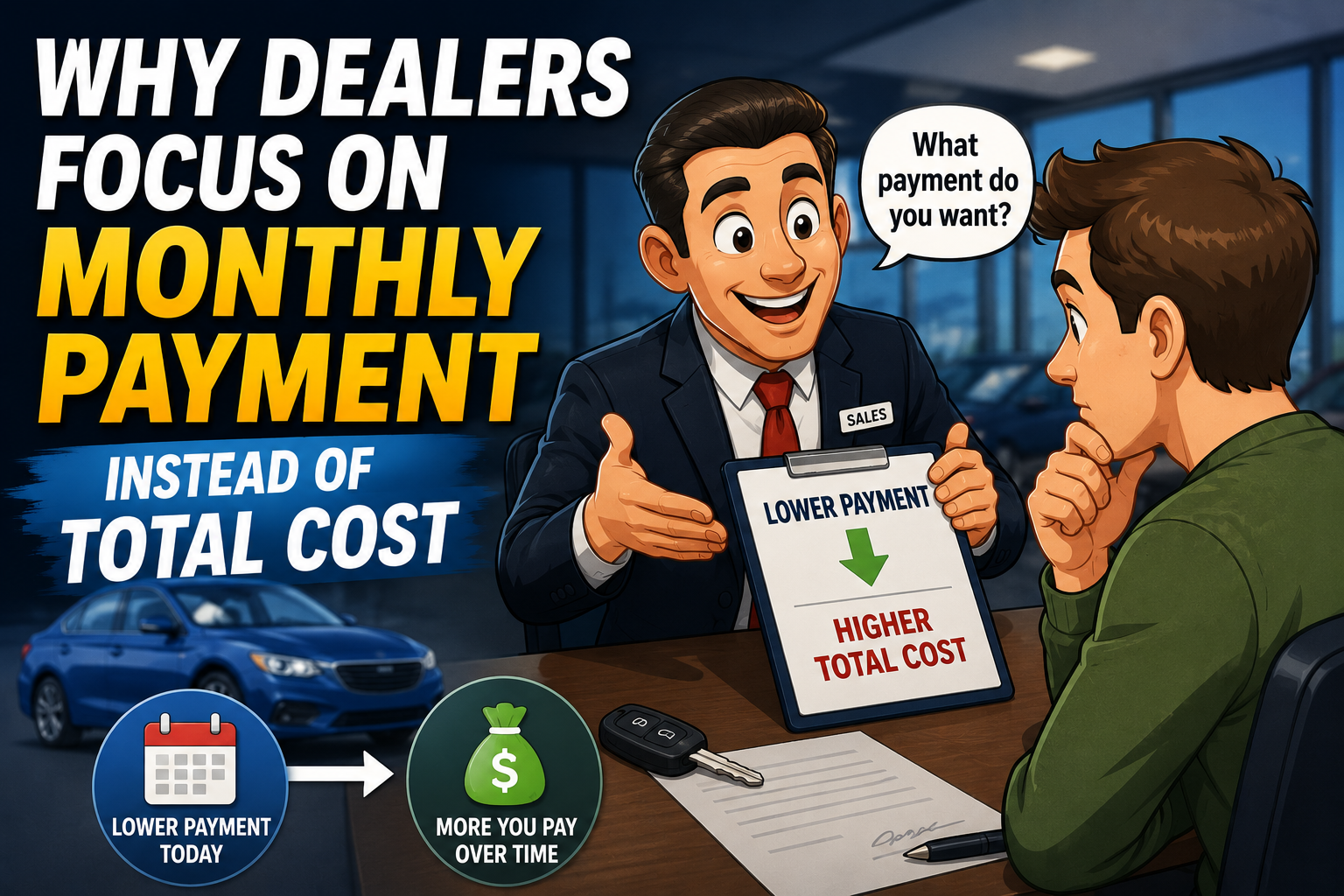
Many buyers shop based on monthly payment, not total price. Dealers know this, which is why conversations often center around “what payment do you want?” instead of how much the vehicle will actually cost over time.
Quick Answer
Dealers focus on monthly payment because extending the loan term can make expensive vehicles feel affordable, even if the buyer ends up paying far more overall.
The monthly payment trap
A buyer may walk in wanting to stay under $500 per month. Instead of lowering the vehicle price, the loan term can simply be stretched longer.
This lowers the payment, but increases:
- Total interest paid
- Time spent in debt
- Risk of negative equity
Example: same car, different loan terms
| Loan Term | Monthly Payment | Total Paid |
|---|---|---|
| 48 months | $725 | $34,800 |
| 72 months | $540 | $38,880 |
The lower payment feels better monthly, but costs thousands more over the life of the loan.
Why buyers focus on payment
Most people budget monthly. They care more about:
- Can I afford this each month?
- Will this fit my paycheck?
- Can I get approved?
Dealers know this, so monthly payment becomes the easiest way to sell a more expensive vehicle.
Longer loans are becoming more common
72- and even 84-month auto loans are now common because vehicle prices continue rising.
Lower payments help buyers qualify, but longer terms often keep people upside down on their loan for years.
If you want to understand how loan length changes total cost, read How Loan Terms Affect Total Cost .
What smart buyers should focus on
- Total loan cost
- Interest rate
- Loan length
- How long they plan to keep the car
A lower payment is not automatically a better deal.
Key Takeaway
Monthly payment matters, but total loan cost matters more. Understanding the difference can save you thousands over the life of a car loan.
Compare monthly payments and total loan cost before buying.
Your credit score heavily impacts your loan payment and approval odds.