How Loan Amortization Works
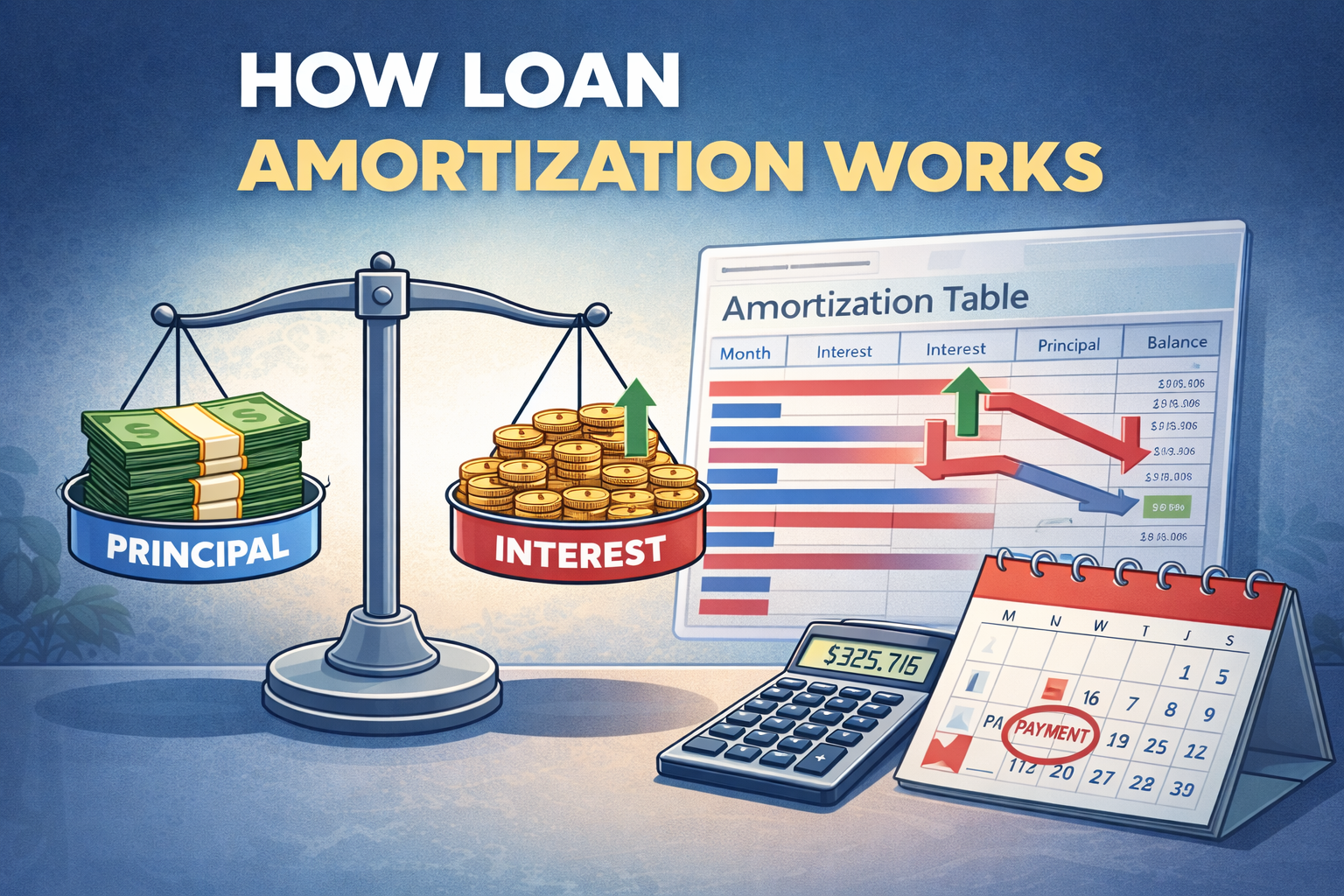
Loan amortization is how your loan gets paid off over time. It explains how each payment is split between interest and principal.
Quick answer
Early in your loan, most of your payment goes toward interest. Over time, more of your payment goes toward the actual loan balance (principal).
What amortization means
When you take out a loan, the lender creates a schedule that shows how each payment is applied over time. This is called an amortization schedule.
How payments are split
Early payments
Most of your payment goes toward interest, because your loan balance is still high.
Middle of the loan
Payments become more balanced between interest and principal.
End of the loan
Most of your payment goes toward the principal, helping you pay off the remaining balance faster.
Why this matters
Understanding amortization helps you see why loans cost more over time. Even if your monthly payment stays the same, where that money goes changes significantly.
This is also why loan length plays a major role in total cost. If you want a deeper breakdown, read How Loan Terms Affect Total Cost .
How to use this to your advantage
- Making extra payments reduces your principal faster
- Shorter loan terms reduce total interest paid
- Understanding timing helps you make smarter decisions
Simple takeaway
- Loan payments are split between interest and principal
- Early payments mostly go to interest
- Later payments focus more on paying off the loan Does a Down Payment Reduce Your Loan Amount?
See how your payments change over time based on loan terms and interest.
Your credit score plays a major role in how much interest you pay over time.