What Is APR? (Layman Terms)
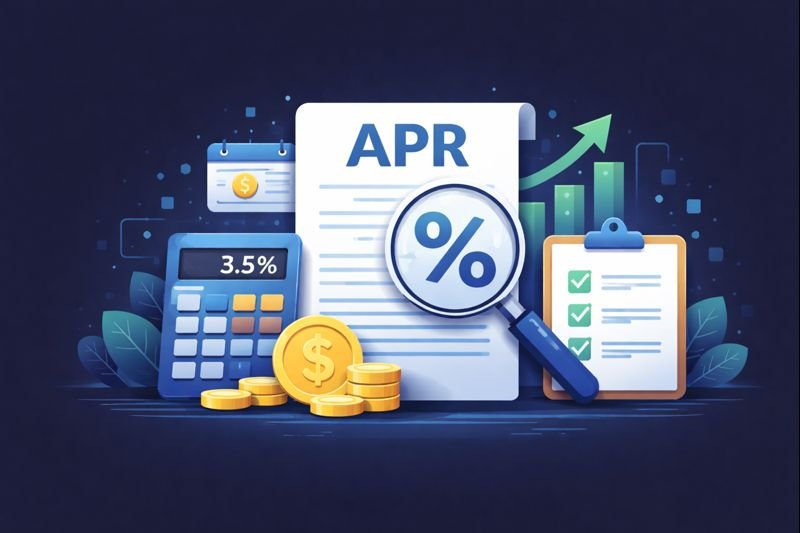
APR stands for Annual Percentage Rate. It’s the true yearly cost of borrowing money.
When you see an APR, it tells you how much a loan or credit card actually costs per year — not just the interest, but most of the fees too.
Why APR Exists
Lenders didn’t always use APR. They used to advertise low interest rates while hiding fees.
APR was created so people could compare loans fairly. A lower APR usually means a cheaper loan.
APR vs Interest Rate
These are not the same.
- Interest Rate: The cost to borrow the money itself.
- APR: Interest rate + most fees, shown as a yearly percentage.
That’s why APR is usually higher than the interest rate.
Example (Real Numbers)
Let’s say you borrow $10,000.
- Interest rate: 6%
- Loan fees: $300
Even though the interest rate is 6%, the APR might be closer to 6.7% once fees are included.
Why APR Matters
APR helps you:
- Compare loans correctly
- See hidden costs
- Avoid expensive financing
If two loans have the same monthly payment, the one with the lower APR is usually the better deal.
APR on Credit Cards
Credit cards also use APR, but it works a little differently.
Credit card APR only matters if you carry a balance. If you pay the card off every month, you usually don’t pay interest.
Bottom Line
APR is the easiest way to understand the real cost of borrowing.
If you remember one thing, remember this:
Lower APR = cheaper loan.
Always compare APRs before signing anything.