
What DTI Do You Need to Qualify for a Mortgage?
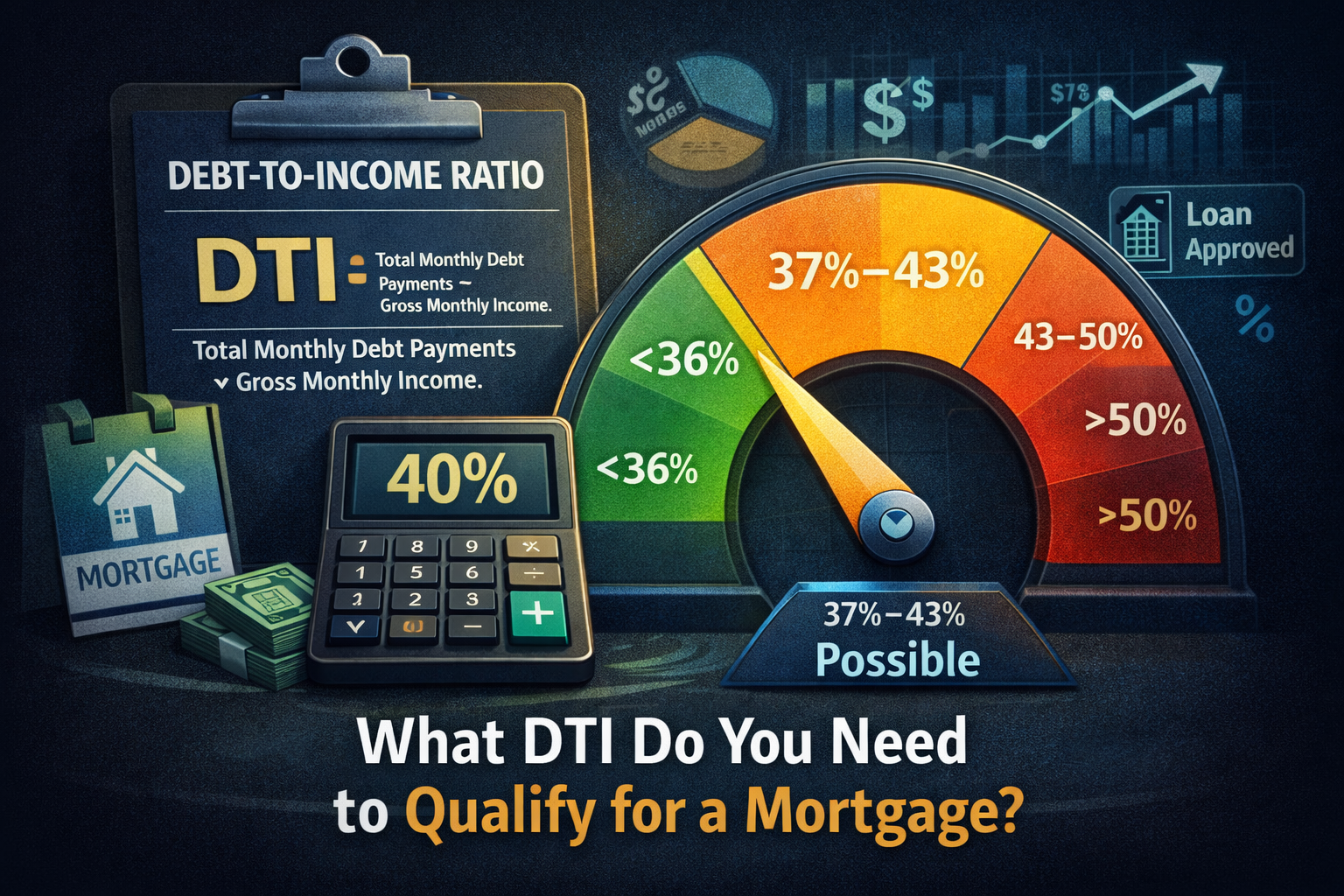
When applying for a mortgage, one of the biggest numbers lenders look at is your debt-to-income ratio (DTI). This number shows how much of your monthly income is already committed to debt payments.
What is DTI?
Your DTI compares your total monthly debt payments to your gross monthly income (before taxes).
DTI = Total Monthly Debt Payments ÷ Gross Monthly Income
If you make $6,000 per month and your total monthly debts are $2,400:
$2,400 ÷ $6,000 = 40% DTI
What DTI do most lenders want?
- 36% or lower: Strong, very safe range
- 37%–43%: Common approval range
- 43%–50%: Possible, depending on loan type and credit
- Above 50%: Difficult to qualify
Many conventional loans prefer to see DTI under 43%, though some programs allow higher ratios if other parts of your application are strong.
What debts count toward DTI?
- Auto loans
- Credit card minimum payments
- Student loans
- Personal loans
- Child support or alimony
Everyday expenses like groceries, utilities, and insurance usually do not count toward DTI.
Front-end vs back-end DTI
Lenders may look at two types:
- Front-end DTI: Just your future mortgage payment ÷ income
- Back-end DTI: All debts (including mortgage) ÷ income
Back-end DTI is the number most people are referring to when they ask what DTI is required.
Lenders often evaluate both front-end and back-end ratios separately. For a deeper breakdown of how those two measurements work, read What Is Front-End vs Back-End DTI? .
Why DTI matters
Lenders use DTI to estimate risk. The higher your DTI, the less room you have in your budget. Even if you qualify at a higher ratio, it doesn’t always mean it’s comfortable.
Mortgage payments are installment loans, meaning part of each payment goes toward interest and part toward principal. If you’re unsure how that breakdown works, read How Interest Is Calculated on Installment Loans to understand how payment structure impacts affordability.
How to lower your DTI
- Pay down credit card balances
- Refinance or consolidate debt
- Increase income
- Choose a lower home price
Mortgage payments are installment loans, meaning each payment includes both interest and principal. If you want to understand how that payment is structured, read How Interest Is Calculated on Installment Loans .
Quickly calculate your DTI ratio to see where you stand before applying for a mortgage.