
What Is Front-End vs Back-End DTI?
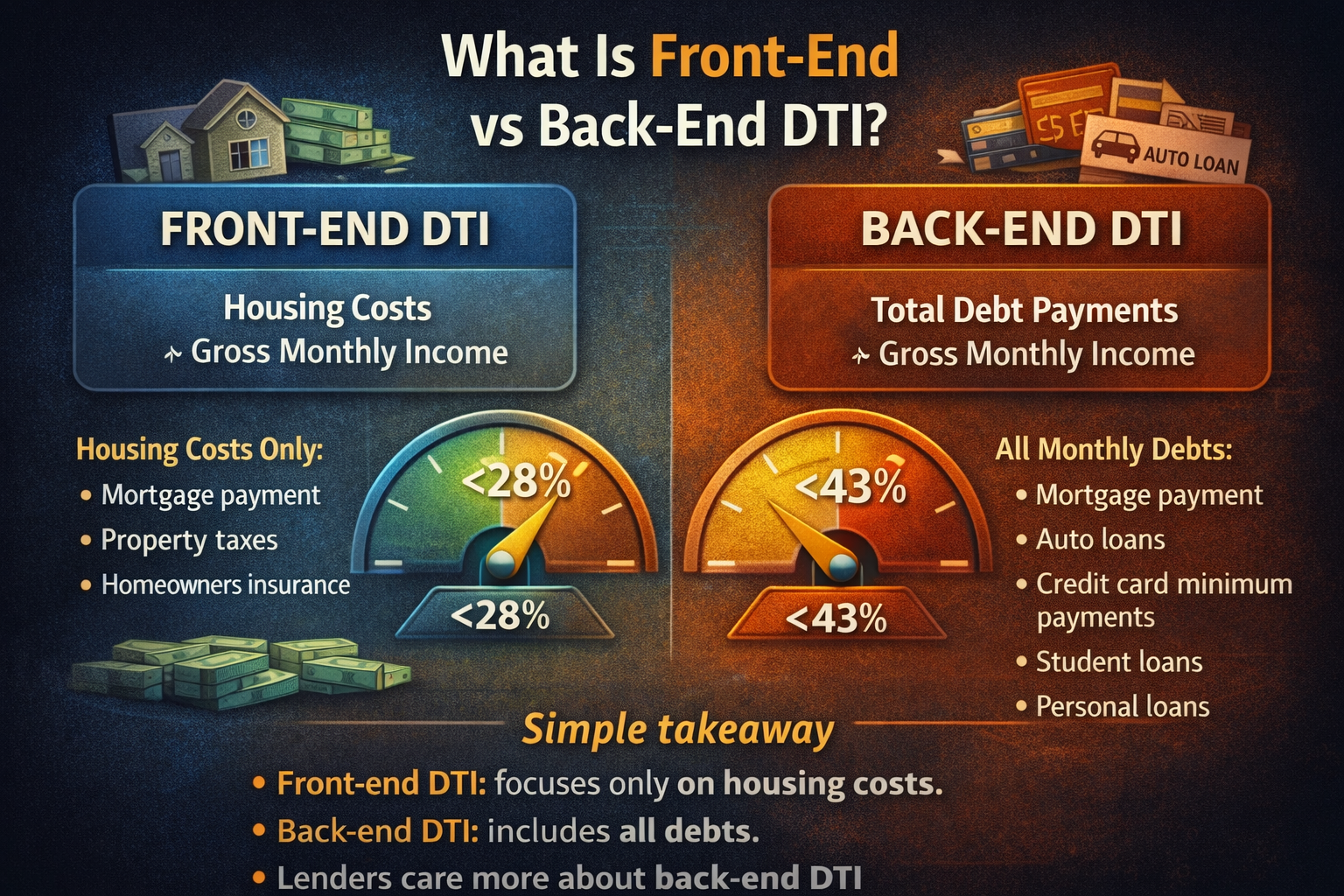
When applying for a mortgage, lenders often talk about two different types of debt-to-income ratios: front-end DTI and back-end DTI. Both measure how much of your income is already committed to debt, but they look at slightly different things.
Front-End DTI
Front-end DTI only looks at your housing costs compared to your gross monthly income.
Front-End DTI = Monthly Housing Payment ÷ Gross Monthly Income
Housing payments typically include:
- Mortgage principal
- Interest
- Property taxes
- Homeowners insurance
Many lenders prefer to see front-end DTI around 28% or lower, though loan programs can vary.
Back-End DTI
Back-end DTI includes all of your monthly debts, not just housing.
Back-End DTI = Total Monthly Debt Payments ÷ Gross Monthly Income
This usually includes:
- Mortgage payment
- Auto loans
- Credit card minimum payments
- Student loans
- Personal loans
Why lenders care about both
Front-end DTI helps lenders estimate whether your housing payment is reasonable for your income. Back-end DTI shows the total financial pressure from all debts combined.
If your back-end DTI is too high, lenders may worry that adding a mortgage payment would stretch your budget too far. What Is a Good Debt-to-Income Ratio?
Typical guideline ranges
- Front-end DTI: often around 28% or lower
- Back-end DTI: commonly under 43%
Some loan programs allow higher ratios depending on credit score, assets, and overall financial profile.
If you’re trying to understand what lenders typically require, you can read What DTI Do You Need to Qualify for a Mortgage? .
Simple takeaway
- Front-end DTI focuses only on housing costs.
- Back-end DTI includes all debts.
- Lenders usually care more about back-end DTI when approving mortgages.