
What Is a Good Debt-to-Income Ratio?
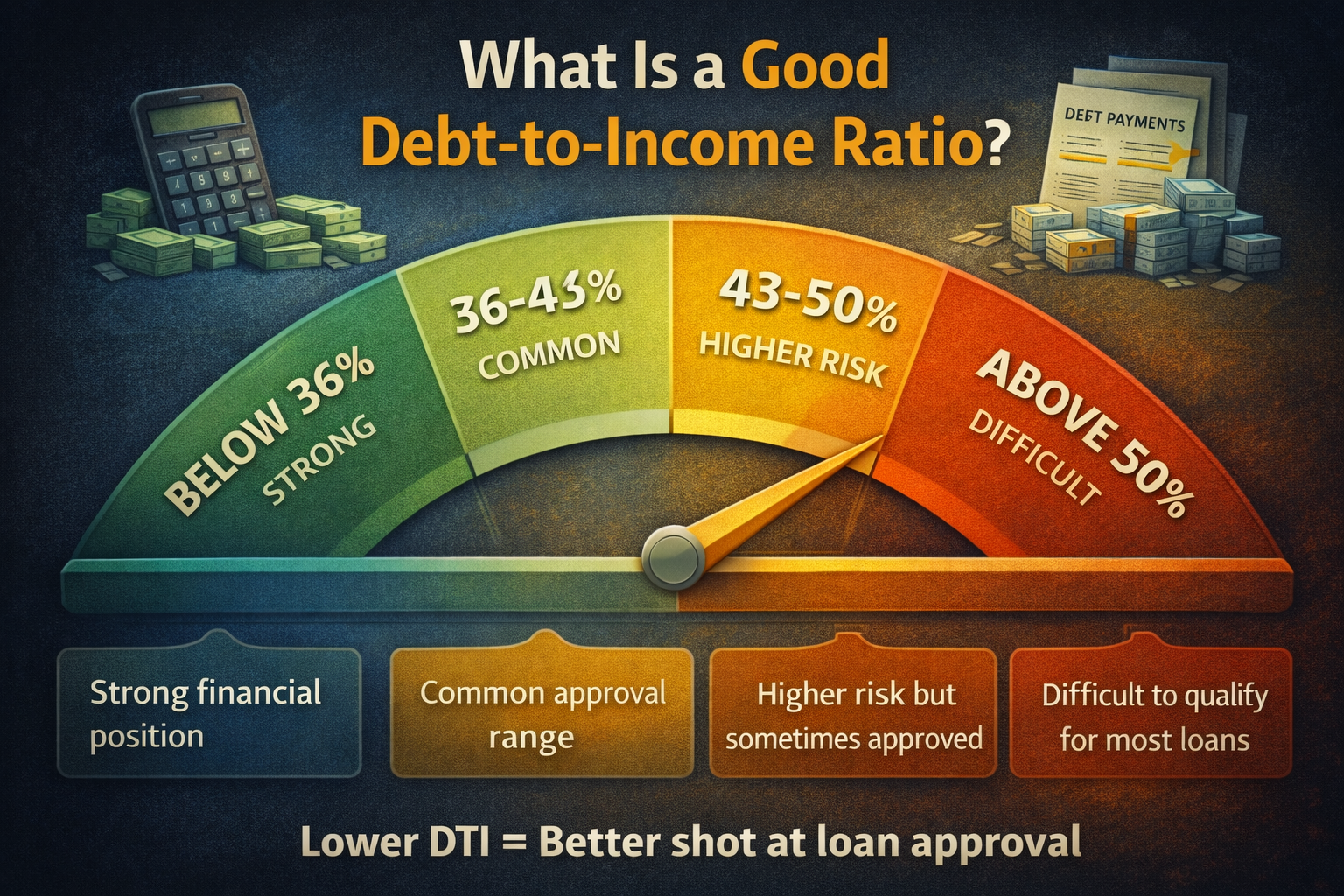
Your debt-to-income ratio (DTI) shows how much of your monthly income goes toward debt payments. Lenders use this number to decide whether you can realistically afford new debt like a mortgage, auto loan, or personal loan.
check your credit scoreHow DTI is calculated
DTI compares your total monthly debt payments to your gross monthly income.
DTI = Total Monthly Debt Payments ÷ Gross Monthly Income
Example:
- Monthly income: $6,000
- Total monthly debts: $2,100
$2,100 ÷ $6,000 = 35% DTI
General DTI guideline ranges
- Below 36% – Strong financial position
- 36%–43% – Common approval range
- 43%–50% – Higher risk but sometimes approved
- Above 50% – Difficult to qualify for most loans
Most mortgage lenders prefer to see a DTI under about 43%, although some loan programs allow higher ratios.
Why lenders care about DTI
The higher your DTI, the more of your income is already committed to debt. If your ratio is too high, lenders may worry that adding another payment could make your finances unstable.
Mortgage lenders especially pay attention to this because housing payments are usually the largest debt most people take on. If you’re applying for a home loan, it’s helpful to understand What DTI Do You Need to Qualify for a Mortgage? .
Ways to improve your DTI
- Pay down credit card balances
- Refinance or consolidate loans
- Increase income
- Avoid taking on new debt before major loan applications
Simple takeaway
- DTI measures how much of your income goes to debt.
- Lower DTI generally improves loan approval chances.
- Most lenders like to see DTI below about 43%.
See your credit score and report without affecting your credit.