
How Pre-Approval Works
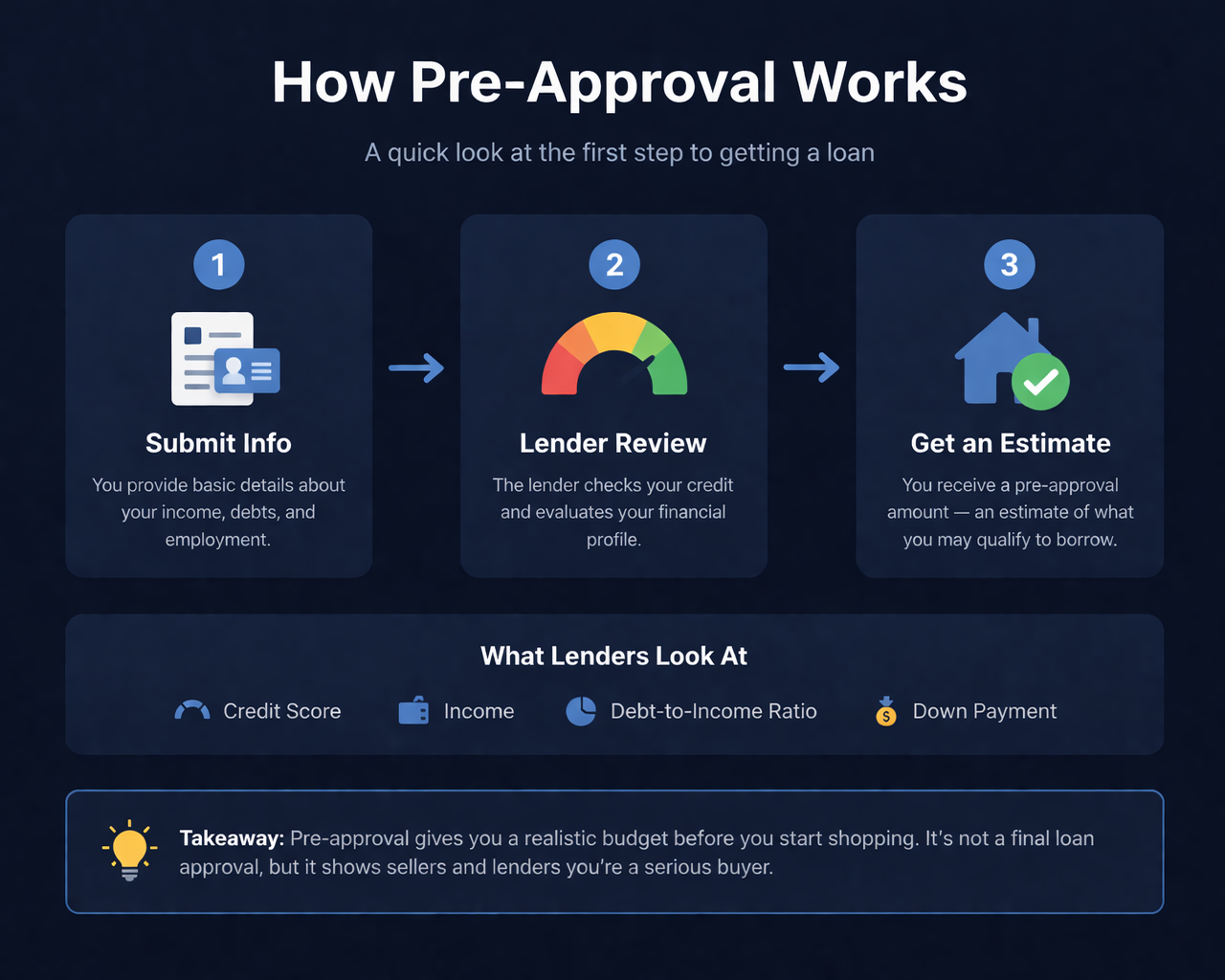
Getting pre-approved is one of the first steps in applying for a loan. It gives you an estimate of how much you can borrow before you officially commit.
What is pre-approval?
Pre-approval is when a lender reviews your financial information and gives you a conditional estimate of how much you may qualify for.
It is not a final approval, but it shows lenders have already looked at your:
- Income
- Credit history
- Debt levels
How the process works
1. Submit basic information
You provide details about your income, debts, and employment.
2. Lender reviews your profile
The lender checks your credit and evaluates your financial situation.
3. Receive a pre-approval amount
You’ll get an estimate of how much you may qualify to borrow.
Why pre-approval matters
Pre-approval helps you understand your budget before shopping for a home or vehicle. It also shows sellers and dealerships that you are a serious buyer.
What affects your pre-approval
- Credit score check your credit score
- Income
- Debt-to-income ratio
- Down payment
Lenders closely evaluate your debt-to-income ratio when determining pre-approval. If you want to understand what range is considered acceptable, read What Is a Good Debt-to-Income Ratio? .
Does pre-approval affect your credit?
Some pre-approvals use a soft credit check, while others may use a hard inquiry. It depends on the lender and the type of loan.
Simple takeaway
- Pre-approval estimates how much you can borrow.
- It is not a final loan approval.
- It helps you shop within a realistic budget.
See what you may qualify for without affecting your credit score.
See your credit score and report without affecting your credit.