
Auto Explained
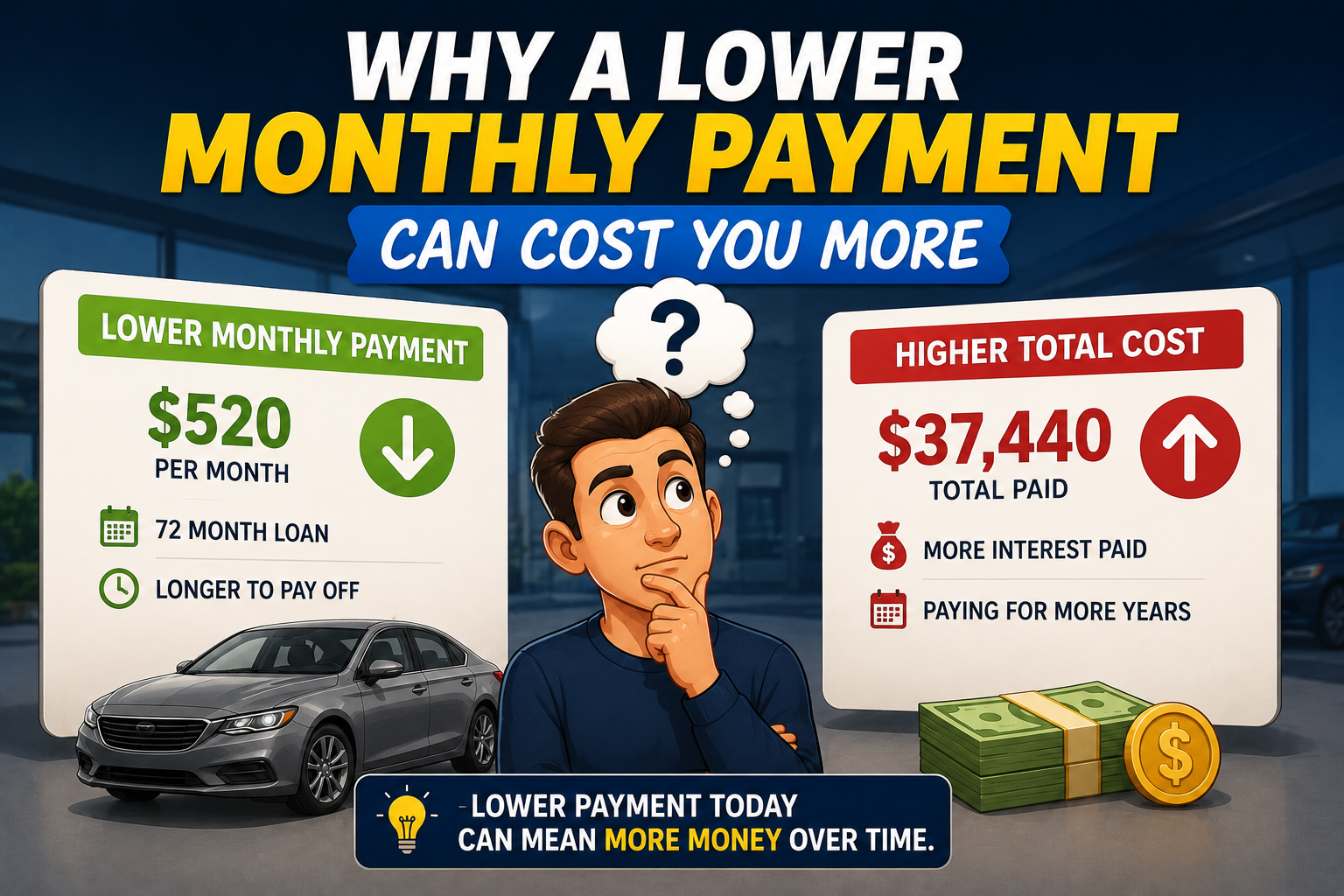
Why a Lower Monthly Payment Can Cost You More
A lower car payment sounds like a better deal, but in many cases it actually means you’ll pay thousands more over time.
Quick Answer
Lower monthly payments usually come from longer loan terms, which increases the amount of interest paid over the life of the loan.
Why lower payments feel attractive
Most buyers shop based on what they can afford each month. A lower payment feels safer and easier to fit into a budget.
Dealers and lenders know this, which is why loan terms are often stretched longer to lower the payment.
How longer loan terms change the math
Extending a loan from 48 months to 72 months lowers the payment, but you make payments for much longer and pay more interest overall.
| Loan Term | Monthly Payment | Total Paid |
|---|---|---|
| 48 Months | $710 | $34,080 |
| 72 Months | $520 | $37,440 |
The lower payment saves money monthly, but costs over $3,000 more overall in this example.
The risk of being upside down
Longer loans also increase the chance of being upside down, meaning you owe more on the car than it’s worth.
This becomes a problem if:
- You want to trade in early
- The car depreciates quickly
- You have negative equity rolled into another loan
Lower payment doesn’t always mean bad
A lower payment can still make sense if:
- You need flexibility in your budget
- You plan to aggressively pay extra later
- The interest rate is very low
The important part is understanding the tradeoff.
What smart buyers compare
- Total loan cost
- Interest paid
- Loan term length
- How long they plan to keep the vehicle
If you want to understand why dealerships often structure deals this way, read Why Dealers Focus on Monthly Payment Instead of Total Cost .
Key Takeaway
A lower monthly payment can help short-term affordability, but it often increases total cost. Always compare the full loan amount, not just the payment.
Compare different loan terms and see the real total cost.
Better credit can help lower both your payment and your total loan cost.